Tracing Firmware Update Cycles That Shape Compliance Thresholds in Variable-Demand Retail Device Networks
David Weber · Aug 3, 2026
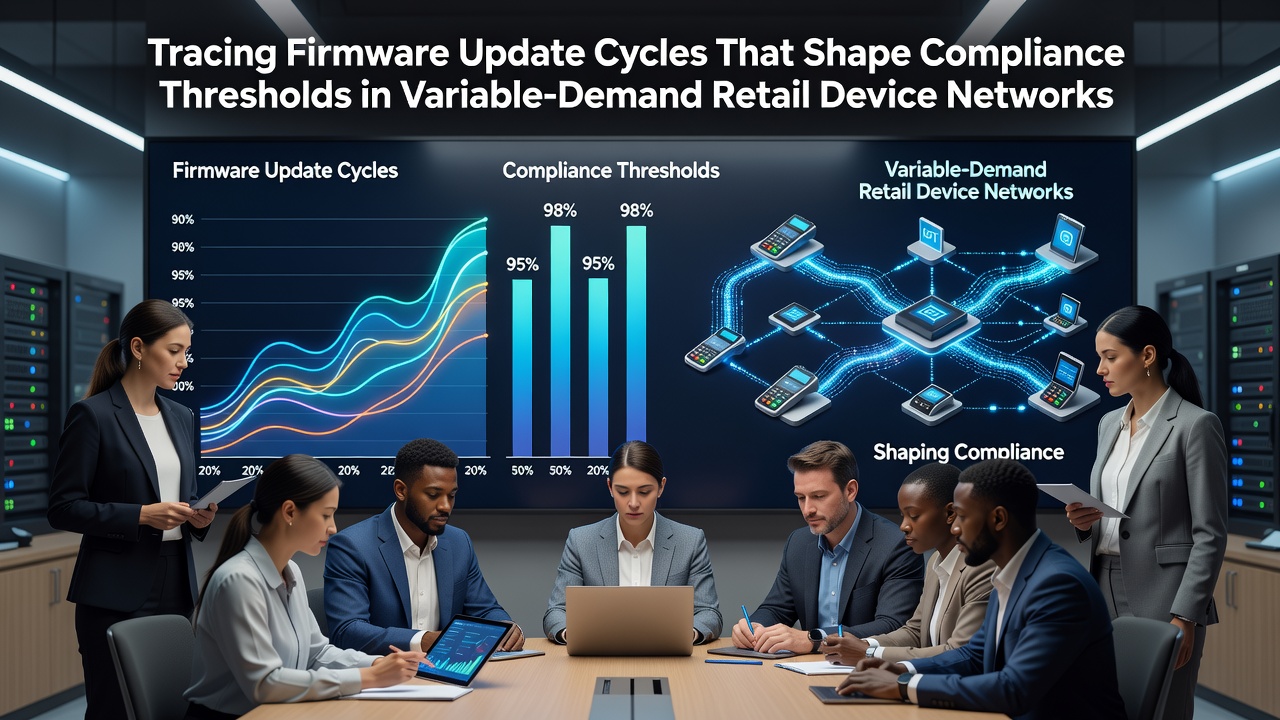
Tracing Firmware Update Cycles That Shape Compliance Thresholds in Variable-Demand Retail Device Networks
Retail device networks operate under fluctuating demand patterns that directly influence when and how firmware updates roll out, and those cycles in turn set the compliance thresholds that devices must meet to stay operational. Data from retail hardware deployments shows that firmware revisions often align with peak sales periods, seasonal inventory shifts, and regulatory deadlines rather than fixed calendar schedules.
Mapping Firmware Cycles to Demand Variability
Variable-demand environments require devices to handle sudden spikes in transaction volume while maintaining security baselines, and firmware updates serve as the mechanism that recalibrates encryption modules, authentication protocols, and logging functions. Researchers tracking point-of-sale terminals across North American chains have documented cycles where updates occur in clusters every 90 to 120 days, timed to coincide with inventory restocking phases and holiday demand surges. These intervals allow operators to test new code on a subset of units before wider deployment, reducing the risk of widespread outages during high-traffic windows.
Compliance thresholds adjust accordingly because each firmware release introduces new security parameters that regulators and standards bodies require for certification. When demand patterns shift rapidly, the window for validation testing narrows, which forces thresholds to become more granular, with separate benchmarks for encryption strength, patch verification speed, and audit trail completeness.
Regulatory Benchmarks and Update Timing
Standards organizations publish guidelines that tie firmware currency to specific security metrics, and retail operators must demonstrate adherence through documented update logs. According to resources from the National Institute of Standards and Technology, firmware integrity checks form a core component of device lifecycle management, requiring cryptographic signatures and rollback protections that directly affect whether a device meets operational thresholds. In August 2026, several North American retail networks completed synchronized update waves that aligned with revised NIST recommendations on supply-chain security for embedded systems.
European operators follow parallel frameworks under ENISA guidance, where firmware update frequency influences data-protection compliance scores for connected retail equipment. Those frameworks emphasize that longer intervals between updates can elevate risk scores, prompting automatic tightening of transaction limits until patches are applied.
Technical Mechanisms Driving Threshold Adjustments
Firmware update cycles incorporate staged rollout phases that include laboratory validation, limited field testing, and full network propagation, each phase carrying its own compliance checkpoint. Variable demand complicates these phases because devices in high-traffic locations may receive updates later than those in stable environments to avoid service interruptions. Observers note that this staggered approach creates temporary disparities in compliance status across the same network, which monitoring platforms must track through centralized dashboards.
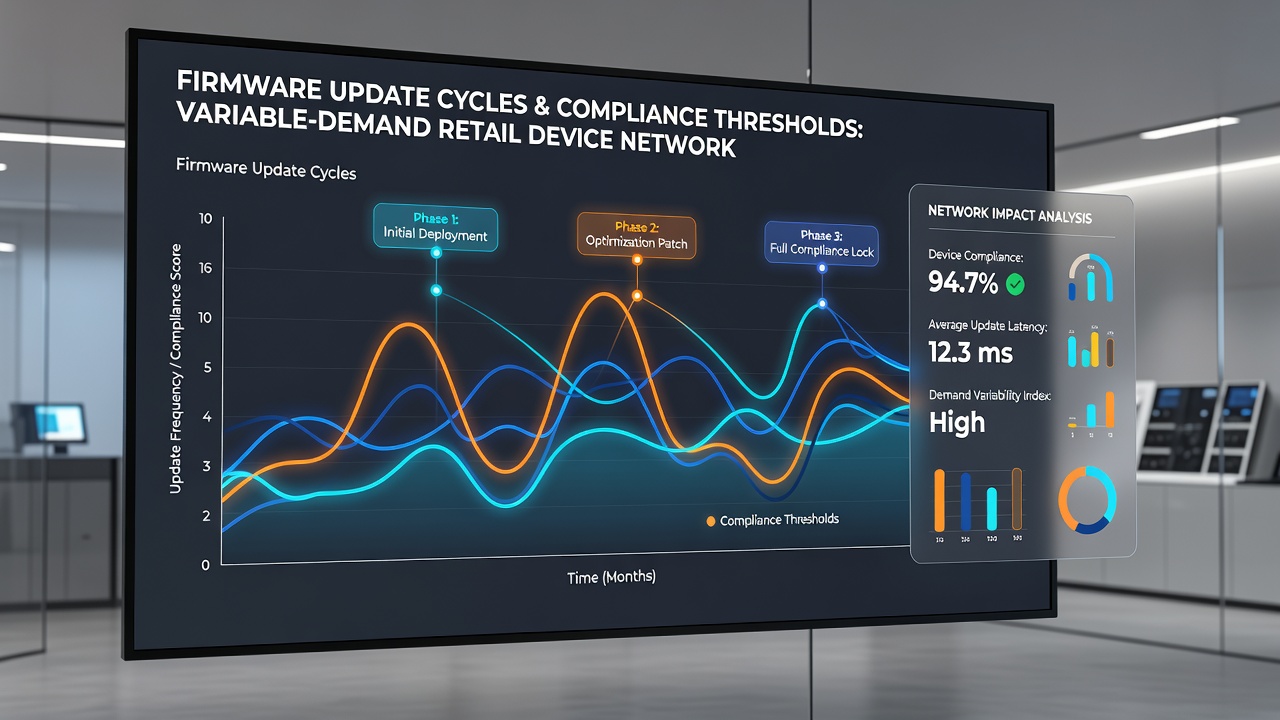
Automated version-control systems now record every device state change, allowing operators to correlate firmware levels with real-time demand metrics such as transaction throughput and error rates. When a device falls below a defined firmware threshold during a demand surge, transaction routing algorithms can redirect activity to compliant units, preserving overall network integrity while the update completes.
Case Patterns in Multi-Region Deployments
One documented deployment across Canadian and Australian retail sites illustrated how firmware cycles adapted to opposite seasonal demand peaks, with Canadian units updated in spring ahead of summer tourism spikes and Australian units revised in fall before holiday shopping periods. These regional differences required centralized compliance platforms to maintain separate threshold profiles that accounted for local regulatory calendars and peak-load statistics.
Industry reports from academic research groups at technical universities have examined how update cadence correlates with reduced vulnerability exposure, showing measurable drops in exploit attempts once devices reach the latest firmware tier. The studies also highlight that networks maintaining shorter update cycles experience fewer compliance audits triggered by threshold breaches.
Integration with Broader Security Infrastructure
Firmware management platforms connect directly with vulnerability databases and threat-intelligence feeds, enabling predictive scheduling that anticipates demand fluctuations before they occur. This integration allows compliance thresholds to be raised or lowered dynamically based on projected load rather than static rules. Operators who align firmware cycles with these predictive models report smoother transitions during demand spikes, as devices enter peak periods already meeting elevated security parameters.
Conclusion
Firmware update cycles function as the operational backbone that determines whether retail device networks remain within compliance thresholds under variable demand conditions. By tracing the timing, validation steps, and regional adaptations of these cycles, network managers gain visibility into how security parameters evolve in response to both regulatory requirements and real-world usage patterns. Continued refinement of update scheduling tools and threshold monitoring systems supports consistent device performance across fluctuating retail environments.