Scheduled Key Rotations and Their Influence on Fraud Thresholds Across Global Subscription Networks
Petra Lorenz · Sep 7, 2026
Scheduled Key Rotations and Their Influence on Fraud Thresholds Across Global Subscription Networks
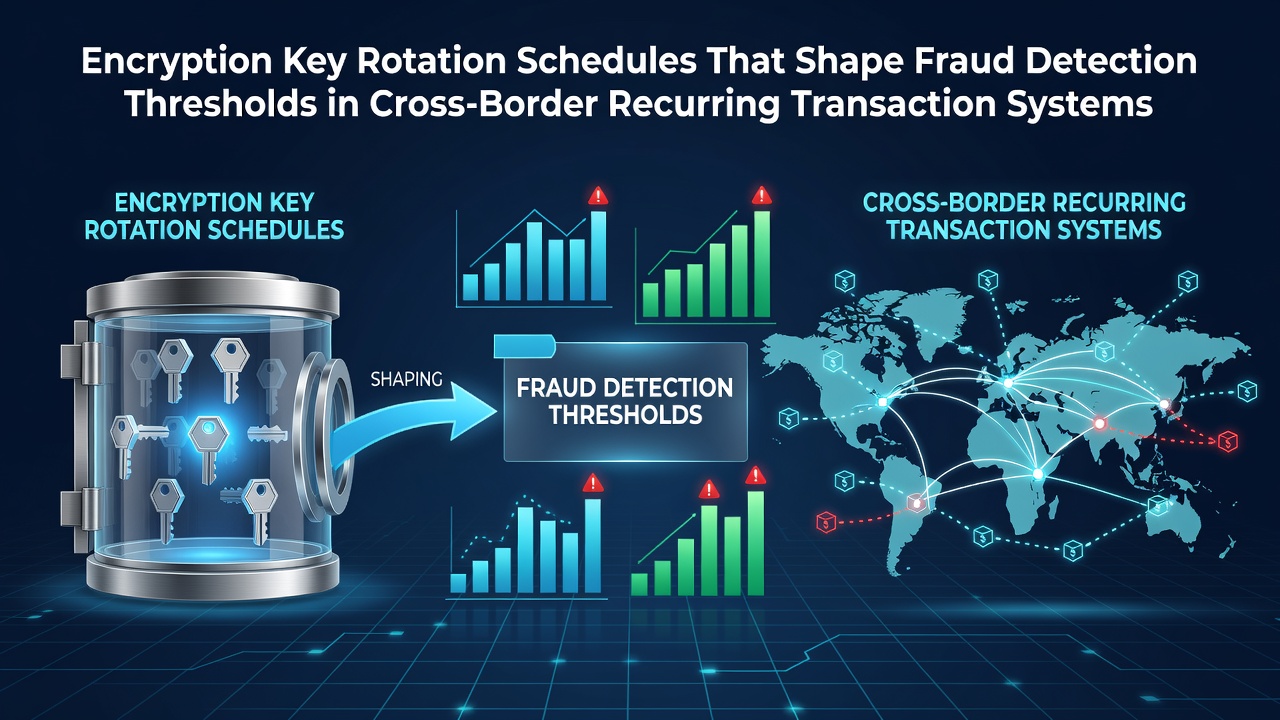
Encryption key rotation schedules operate as structured intervals where cryptographic keys get replaced to maintain security integrity in payment infrastructures, and these intervals directly calibrate the sensitivity levels that fraud detection algorithms apply to recurring cross-border transactions. Systems handling international subscriptions rely on these schedules to adjust thresholds that flag unusual patterns such as velocity spikes or geographic mismatches, since outdated keys increase exposure risks while frequent rotations can trigger stricter monitoring rules.
Mechanics of Key Rotation in Recurring Systems
Payment platforms process recurring charges by storing encrypted card details or tokens, and rotation cycles ensure that long-term keys do not remain static across multiple billing periods. Research from the National Institute of Standards and Technology outlines recommended intervals based on key length and algorithm strength, where shorter cycles apply to high-volume environments. In cross-border setups, these cycles intersect with compliance requirements that vary by jurisdiction, forcing operators to synchronize rotations with regional data protection mandates.
Operators often align rotation events with transaction approval engines, so that when a key changes, the system recalibrates detection parameters to account for potential authentication hiccups during the transition window. This recalibration prevents legitimate recurring payments from being misclassified while maintaining vigilance against unauthorized attempts that exploit key changeovers.
Threshold Calibration Linked to Rotation Events
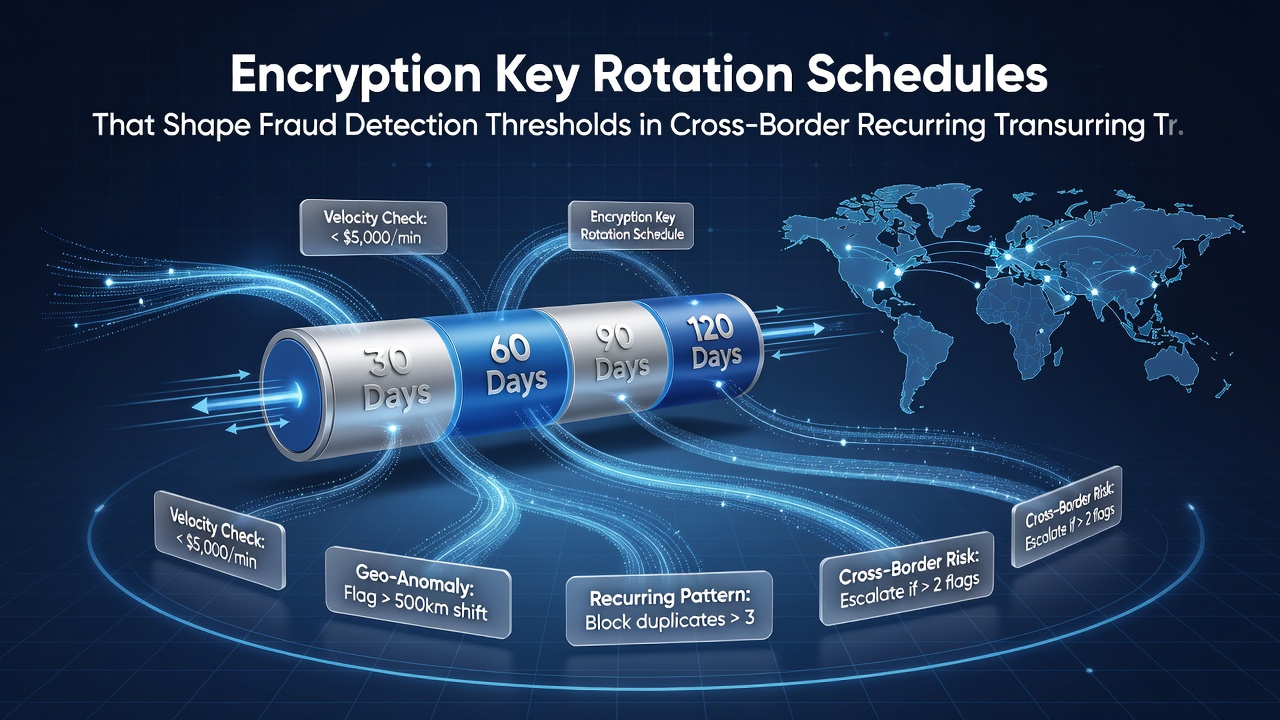
Fraud detection thresholds in these networks include parameters for transaction amount, frequency, and location consistency, and rotation schedules influence how aggressively these parameters tighten or loosen. During a rotation period, platforms may elevate scrutiny on high-value subscriptions originating from regions with weaker encryption standards, since the brief window of dual-key usage can create temporary vulnerabilities. Data from payment security analyses show that systems implementing automated threshold adjustments tied to rotation logs experience fewer false positives in recurring billing flows.
One case involved a multi-currency subscription service that adjusted its velocity thresholds upward immediately after each quarterly key rotation, allowing the algorithm to learn new encryption signatures before resuming baseline monitoring. This approach integrated rotation timestamps directly into the fraud scoring model, creating a feedback loop where historical rotation data refined future threshold settings.
Cross-Border Considerations and Regulatory Timing
International recurring transaction systems must navigate differing encryption standards across borders, where a rotation schedule compliant in one region may conflict with another. Updates planned for September 2026 from European regulatory frameworks are expected to introduce stricter key lifecycle reporting for subscription services, requiring operators to document how rotation intervals affect fraud detection accuracy. Platforms handling flows between North America and Asia-Pacific markets often adopt hybrid schedules that accommodate both PCI-derived guidelines and emerging local mandates.
Industry reports indicate that linking rotation frequency to regional risk scores helps stabilize threshold performance, because higher-risk corridors receive shorter rotation intervals paired with elevated detection sensitivity. Observers note that this linkage reduces the window during which compromised keys could facilitate undetected recurring fraud across multiple jurisdictions.
Integration with Broader Security Protocols
Encryption key management does not function in isolation but connects to tokenization layers and authentication protocols that collectively shape fraud thresholds. When a rotation occurs, associated tokens may require re-issuance, prompting the fraud system to apply temporary holds or secondary verification steps on affected recurring profiles. This coordinated response ensures continuity while preventing threshold drift that could allow anomalous transactions to bypass controls.
Studies from academic research groups examining payment ecosystems have documented correlations between rotation cadence and detection efficacy, revealing that schedules exceeding 90 days in high-volume cross-border environments correlate with measurable increases in threshold bypass attempts. Operators therefore embed rotation metadata into machine learning models that dynamically tune detection rules based on key age and usage patterns.
Conclusion
Encryption key rotation schedules serve as foundational inputs that determine how fraud detection thresholds respond to patterns in cross-border recurring transactions, with synchronization across technical, regulatory, and operational layers producing measurable effects on system performance. Continued alignment between rotation timing and threshold adjustments supports consistent security outcomes as payment networks expand globally.