How Retail Chains Coordinate Settlement Schedules with Stock Replenishment Cycles in Multi-Site Transaction Networks
Petra Lorenz · Jul 22, 2026
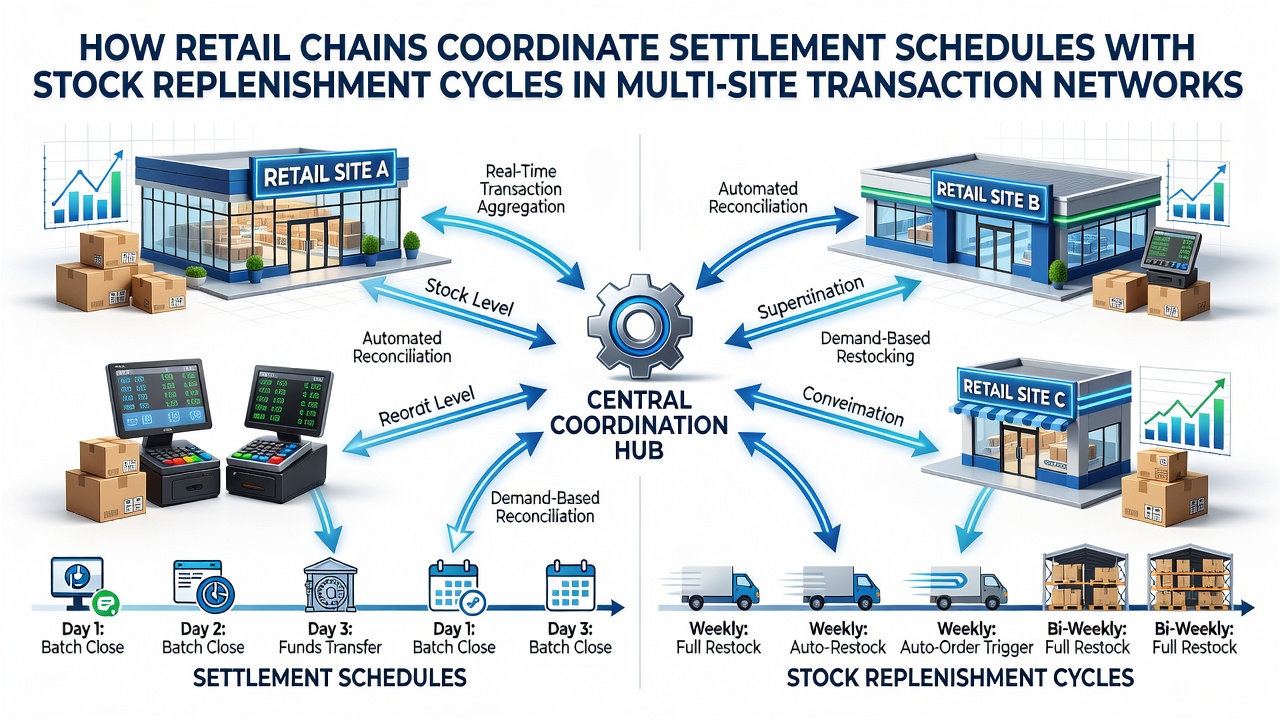
How Retail Chains Coordinate Settlement Schedules with Stock Replenishment Cycles in Multi-Site Transaction Networks
Retail chains operating across numerous sites must align the timing of incoming funds from card transactions with teh rhythm of inventory restocking, because payment settlements arrive on fixed cycles while stock needs fluctuate with sales patterns. Data from the U.S. Census Bureau shows that multi-site retailers process billions in card payments monthly, yet settlement windows often span two to five business days depending on processor agreements and transaction volume. This lag creates cash-flow pressure when replenishment orders require immediate capital for suppliers who demand payment on delivery or within short net terms. Settlement schedules typically follow batch processing rules set by card networks, where funds move from acquirers to merchant accounts after authorization, capture, and clearing steps complete. Retail operators track these inflows against point-of-sale records to predict available liquidity, and they adjust replenishment orders accordingly. In practice, chains use enterprise resource planning systems that pull real-time transaction data and overlay projected settlement dates, allowing procurement teams to time purchase orders so that goods arrive just as cleared funds become accessible.Core Elements of Settlement Timing
Card issuers release funds according to interchange rules that vary by card type, transaction category, and merchant category code, while acquirers deduct fees before crediting accounts. Retail networks therefore maintain rolling forecasts that combine historical settlement data with current daily volumes across all sites. These forecasts feed into automated alerts that flag when projected cash positions fall below thresholds needed for upcoming supplier payments.
Observers note that chains with high-volume locations often negotiate shorter settlement windows or reserve lines of credit to bridge gaps, whereas smaller sites rely more heavily on synchronized ordering. July 2026 brought updates to certain processor reporting standards that require clearer disclosure of hold periods, giving retailers more precise data for planning replenishment cycles.Replenishment Cycle Mechanics
Stock replenishment in multi-site networks follows demand-sensing models that incorporate point-of-sale velocity, seasonal trends, and lead times from distribution centers. Buyers place orders based on minimum stock levels and projected sales, yet they must ensure suppliers receive payment without triggering penalties or delivery delays. When settlement funds arrive later than expected, chains shift orders to vendors offering extended terms or use centralized buying pools that consolidate payments across locations.
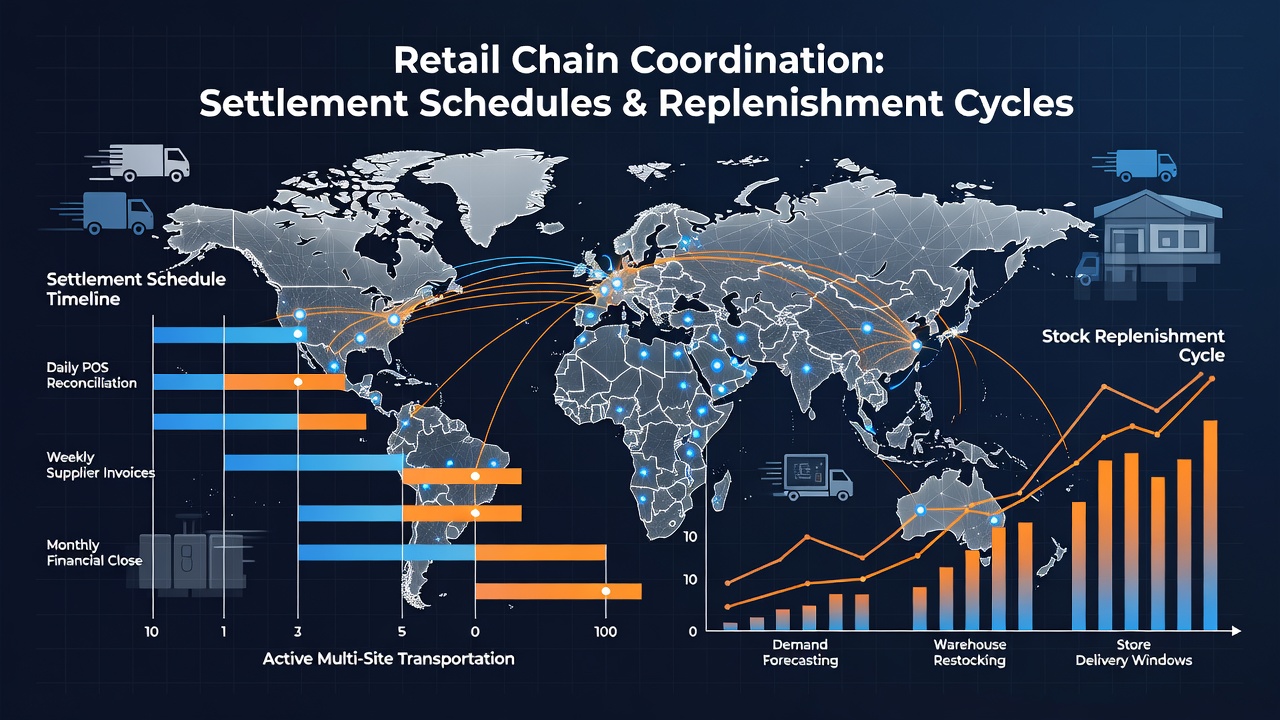
Integration Points Between Payments and Inventory
Modern retail platforms link payment gateways directly to inventory management modules so that cleared transaction totals update available cash positions in near real time. This integration lets planners release replenishment orders only when projected settlements cover the required outlay, reducing reliance on external financing. Systems also flag discrepancies between expected and actual settlement amounts, prompting immediate review of disputed transactions that could affect cash availability.
Research from industry reports indicates that synchronized systems cut average days of inventory on hand by aligning purchase timing with cash inflows more tightly. Chains achieve this through daily reconciliation routines that match settlement reports against replenishment calendars, adjusting order quantities when shortfalls appear.Operational Practices Across Networks
Multi-site operators often centralize settlement monitoring at headquarters while allowing regional teams to manage local replenishment within approved parameters. Centralized teams review aggregated cash positions each morning and release bulk payments to suppliers, then allocate incoming stock to individual stores based on velocity data. This structure keeps settlement schedules visible across the network and prevents individual sites from ordering beyond collective cash capacity.
Chains also segment replenishment into fast-moving and slow-moving categories, accelerating orders for high-turnover items that generate quicker settlement cash while stretching cycles for seasonal goods. Data routing enhancements and automated approval workflows support these decisions by surfacing settlement projections alongside inventory alerts.Technology Supporting Coordination
Enterprise systems combine payment processing APIs with supply-chain planning tools, creating dashboards that display settlement calendars next to projected stock needs. Retailers configure rules that automatically pause or advance replenishment orders when settlement forecasts shift. Some networks incorporate predictive analytics that model how changes in sales volume or processor hold times will affect future cash positions, allowing preemptive adjustments weeks in advance.
According to analyses published by the Bank for International Settlements, payment timing data has become a standard input for inventory optimization models used by large retailers. These models treat settlement schedules as fixed constraints and solve for replenishment quantities that keep working capital requirements within available liquidity.Conclusion
Coordination between settlement schedules and stock replenishment cycles in multi-site retail networks rests on integrated data flows, centralized oversight, and rule-based ordering systems. Retailers that maintain accurate forecasts and flexible supplier terms reduce financing costs while keeping shelves stocked. As payment standards evolve and real-time reporting improves, these alignment practices continue to shape operational efficiency across distributed retail operations.