Charting Approval Thresholds That Link Seasonal Retail Patterns to Multi-Region Account Access
Logan Weber · Jul 27, 2026
Charting Approval Thresholds That Link Seasonal Retail Patterns to Multi-Region Account Access
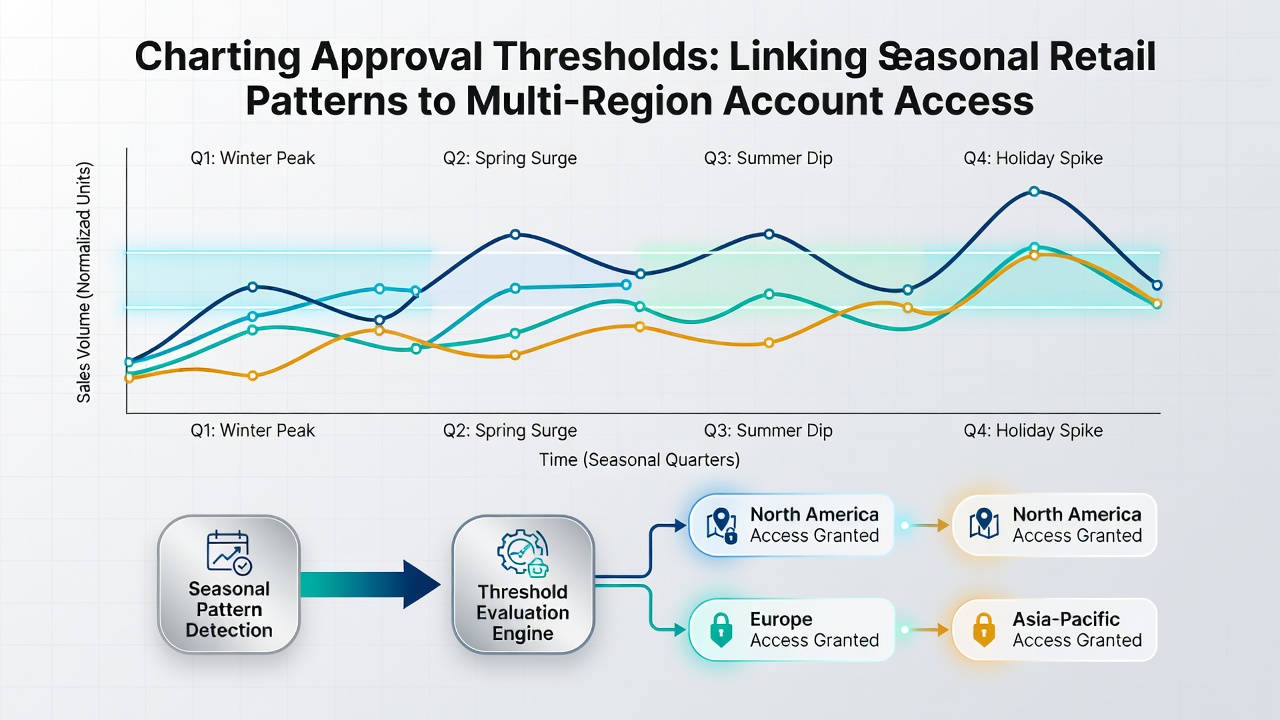
Payment processors adjust approval thresholds throughout the year to match shifting retail volumes, and those adjustments directly influence how accounts gain or lose access across different geographic zones. Seasonal retail patterns create predictable spikes in transaction requests, which in turn require systems to recalibrate limits so that legitimate purchases clear while risk exposure stays contained.
Seasonal Demand Shifts Drive Threshold Calibration
Retail activity peaks during specific periods such as back-to-school months or end-of-year holiday cycles, and data from multiple regions shows that transaction approval rates rise sharply when demand surges. Processors track these patterns through historical volume metrics, then raise or lower approval thresholds accordingly so that high-volume periods do not trigger unnecessary declines. Observers note that multi-region account access becomes more complex because each market experiences its own seasonal rhythm, requiring coordinated threshold rules that prevent one region’s peak from disrupting access in another.
July 2026 figures from retail transaction datasets already indicate early back-to-school spending momentum across North American and European channels, prompting several processors to begin preemptive threshold increases. Those increases allow accounts tied to inventory suppliers in multiple countries to maintain continuous access while volume climbs. The process relies on automated monitoring tools that compare current request rates against established seasonal baselines, then apply graduated limit changes without manual intervention in most cases.
Multi-Region Account Access and Threshold Coordination
Accounts operating across borders must satisfy varying regulatory and risk parameters, yet seasonal retail patterns do not align neatly between regions. A threshold calibrated for North American holiday traffic may prove too restrictive for Australian spring sales cycles, so processors maintain region-specific rule sets that still feed into a unified account profile. Research indicates that synchronized threshold charting reduces access interruptions by aligning approval logic with local demand forecasts while preserving global visibility into overall account behavior.
One study of cross-border merchant platforms revealed that accounts with dynamic thresholds experienced fewer access blocks during overlapping seasonal peaks than those using static limits. The difference stems from real-time data feeds that adjust parameters as volume moves from one region to another, allowing the system to recognize that a sudden uptick in European requests aligns with expected summer clearance patterns rather than anomalous activity.
Technical Mechanisms Behind Threshold Charting
Systems chart approval thresholds by layering multiple data inputs: historical transaction velocity, region-specific fraud indices, and forward-looking retail forecasts. When seasonal indicators point to an upcoming surge, the charting engine raises velocity limits and relaxes certain velocity checks so that accounts retain access. Conversely, post-peak periods see thresholds tightened to reflect lower expected volumes and to protect against lingering fraud attempts that often follow high-traffic windows.
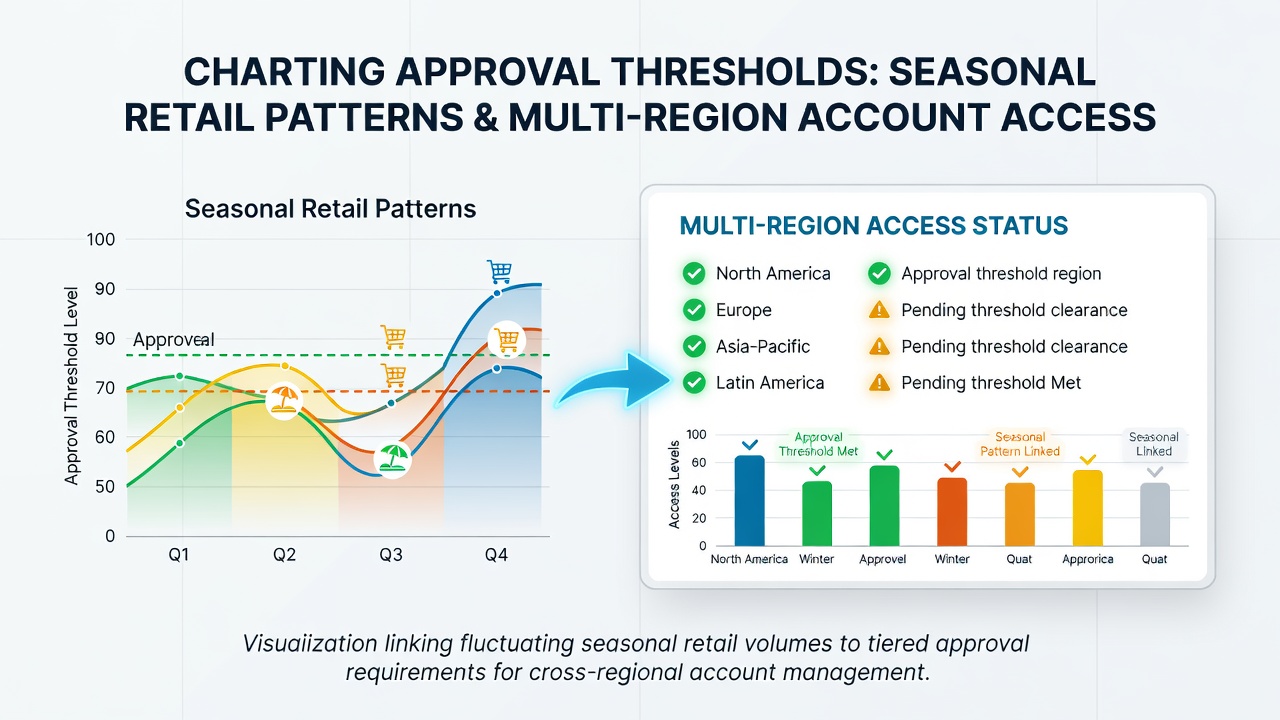
According to Federal Reserve payment system analyses, coordinated threshold adjustments across regions lowered false-positive declines by measurable margins during the 2025 holiday cycle. The same report notes that accounts serving both North American and Asia-Pacific markets benefited most when processors applied staggered threshold changes timed to each region’s retail calendar rather than applying uniform global rules.
Regulatory and Compliance Considerations
Multi-region operations must also satisfy overlapping compliance requirements that affect how thresholds can shift. Data protection rules in the European Union and consumer protection guidelines issued by the Australian Competition and Consumer Commission both require transparent disclosure when access limits change, even when those changes follow predictable seasonal patterns. Processors therefore document threshold adjustments and retain audit trails that demonstrate the link between retail volume forecasts and access modifications.
Observers note that accounts crossing these jurisdictions maintain separate regional profiles that feed into a master access record, ensuring that seasonal threshold increases in one market do not inadvertently violate limits set by another. The approach keeps approval logic responsive while preserving regulatory alignment across borders.
Conclusion
Charting approval thresholds that connect seasonal retail patterns to multi-region account access requires continuous data integration and region-aware rule engines. Processors that align threshold adjustments with local demand cycles while maintaining unified account oversight reduce access friction and support smoother cross-border operations. As retail calendars evolve and new volume data becomes available, the same charting methods adapt without requiring wholesale redesign of existing access frameworks.