Aligning Subscription Timelines with Security Protocol Updates Across International Processing Platforms
Lars Russell · Jul 18, 2026
Aligning Subscription Timelines with Security Protocol Updates Across International Processing Platforms
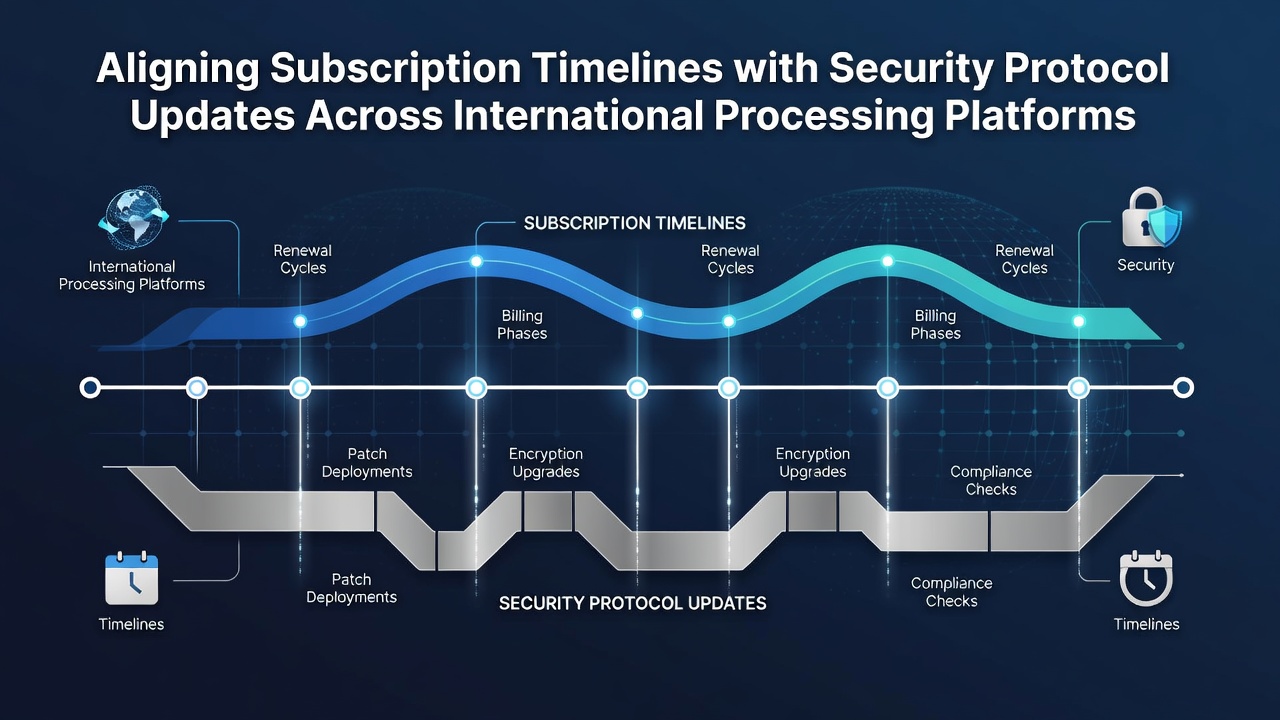
Payment platforms that handle recurring transactions across borders must coordinate billing cycles with evolving security requirements, since mismatches create gaps that expose data during transition periods. International operators track these elements through centralized calendars that flag both renewal dates and protocol change windows, allowing systems to apply updates before the next charge processes. Data from global transaction networks shows that platforms maintaining such coordination report fewer interruptions in service continuity while meeting compliance benchmarks set by multiple jurisdictions.
Core Elements of Subscription Timeline Management
Subscription timelines operate on fixed intervals that repeat monthly, quarterly, or annually, and these patterns intersect wth security updates when protocols like encryption standards or authentication methods receive revisions. Processors in regions such as the European Union and North America maintain logs that map each customer cohort's next billing date against scheduled protocol releases, which prevents charges from occurring on systems still running outdated configurations. Observers note that this mapping reduces the window during which a transaction might route through an unpatched node in multi-country networks.
International processing platforms often segment their user bases by region to accommodate varying regulatory deadlines, and alignment efforts focus on grouping renewals so that security patches apply uniformly before batches activate. Research from payment industry reports indicates that staggered rollouts across time zones allow teams to monitor outcomes in one market before extending changes to others, minimizing widespread disruption.
Security Protocol Update Cycles and Their Timing
Security protocols in payment environments receive updates at intervals determined by standards bodies, with major revisions typically announced twelve to eighteen months in advance to give operators preparation time. Effective July 2026, several platforms anticipate adjustments to authentication frameworks that will require renewed certificates on all recurring transaction endpoints, and those managing international subscriptions have already begun shifting renewal dates to fall after these implementation dates. Such forward planning ensures that each billing event executes under the strengthened parameters rather than legacy ones.
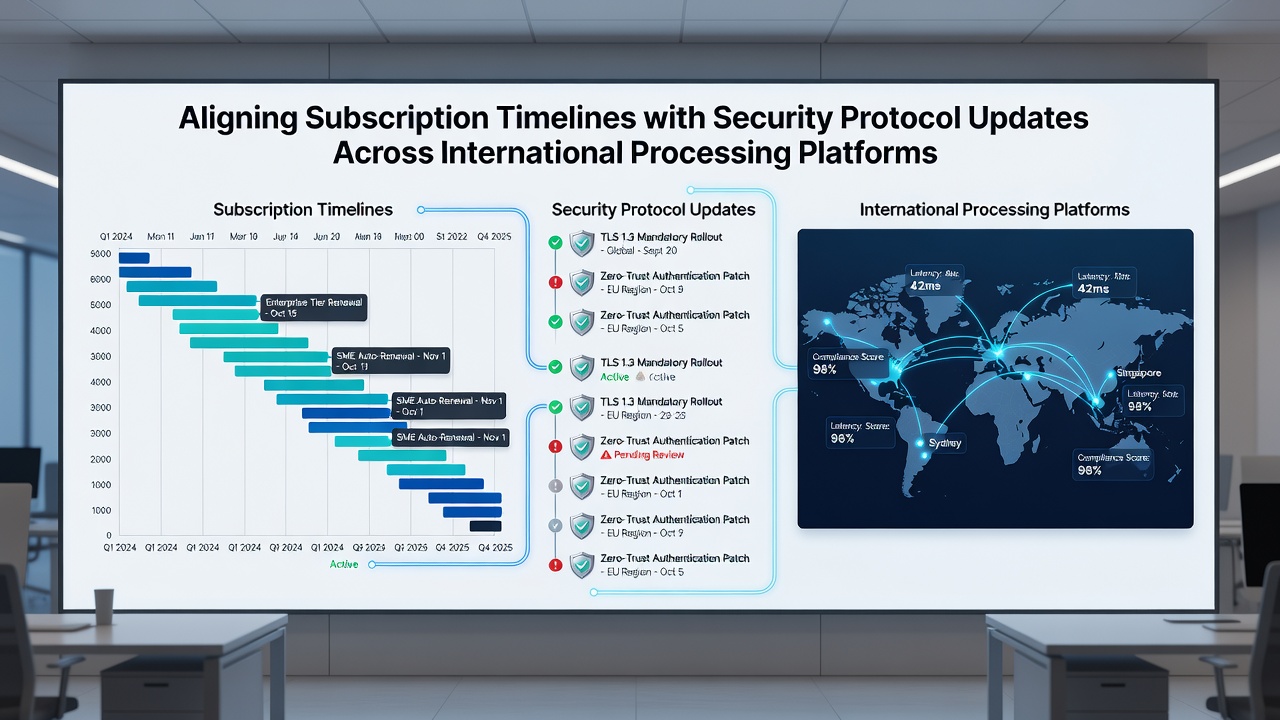
Platforms integrate these timelines into automated workflows that trigger compliance checks at set intervals before a subscription renews, and this automation pulls from shared databases that aggregate update schedules from regulators in different countries. Figures from transaction monitoring services reveal that systems employing these automated alignments experience fewer instances of failed authorizations tied to protocol mismatches.
Coordination Challenges Across Borders
Differences in national holidays, fiscal reporting periods, and local data residency rules complicate direct alignment, because one market's renewal window may overlap with another's mandatory maintenance shutdown. Processing teams address these by building buffer periods into their calendars, allowing security patches to complete even when billing dates shift slightly within acceptable ranges. Those who've studied cross-border operations observe that platforms using unified dashboards can visualize these overlaps and adjust cohort groupings accordingly without manual intervention for every account.
Language and documentation variations further slow coordination, since protocol update notices arrive in multiple formats and must be translated accurately for regional teams. Industry data shows that organizations investing in centralized translation repositories complete alignment tasks faster than those handling communications separately per jurisdiction.
Implementation Approaches Used by Platforms
Many operators adopt phased migration strategies where subscriptions migrate to updated security layers in waves that follow geographic clusters, beginning with markets that share similar regulatory calendars. This method lets teams validate performance metrics after each wave before advancing, and it draws on historical transaction volumes to predict load during the transition. According to PCI Security Standards Council resources, documented migration patterns demonstrate that phased approaches maintain authorization success rates above baseline levels throughout the process.
Another technique involves embedding protocol version checks directly into the billing engine, so any subscription attempt automatically routes to the current security configuration or defers until the update completes. Platforms report that this embedded logic cuts manual oversight requirements while ensuring compliance across all active recurring streams.
Monitoring and Adjustment Mechanisms
Continuous monitoring tools track both subscription activity and protocol status in real time, flagging any account that risks billing under an outdated setup. These tools feed into adjustment protocols that can shift a renewal by a few days to align with patch completion, and data from multi-regional networks indicates this flexibility prevents most compliance incidents. Teams review aggregated logs monthly to refine prediction models for future update cycles.
Collaboration between technical and operations groups ensures that changes to one side of the alignment equation receive immediate reflection on the other, creating feedback loops that tighten coordination over successive cycles. External analyses from organizations like the Bank for International Settlements highlight how such loops contribute to overall stability in global payment infrastructures.
Conclusion
Aligning subscription timelines with security protocol updates requires systematic mapping, automated checks, and cross-border coordination that accounts for regional differences in regulations and operational constraints. Platforms that maintain these alignments through structured calendars and embedded verification steps sustain compliance while preserving transaction flow across international networks. As update schedules evolve, including those slated around July 2026, the same principles continue to guide effective synchronization.